Join us at the
2026 Space & Missile Defense Symposium
Booth #125
Huntsville, Alabama
August 10-13, 2026







Test & Evaluation
TRUSTED PARTNER ACROSS THE DoW
- U.S. Army Space and Missile Defense Command (USASMDC)
- Program Executive Office – Missiles and Space
- Missile Defense Agency
- Navy
TEST SUPPORT
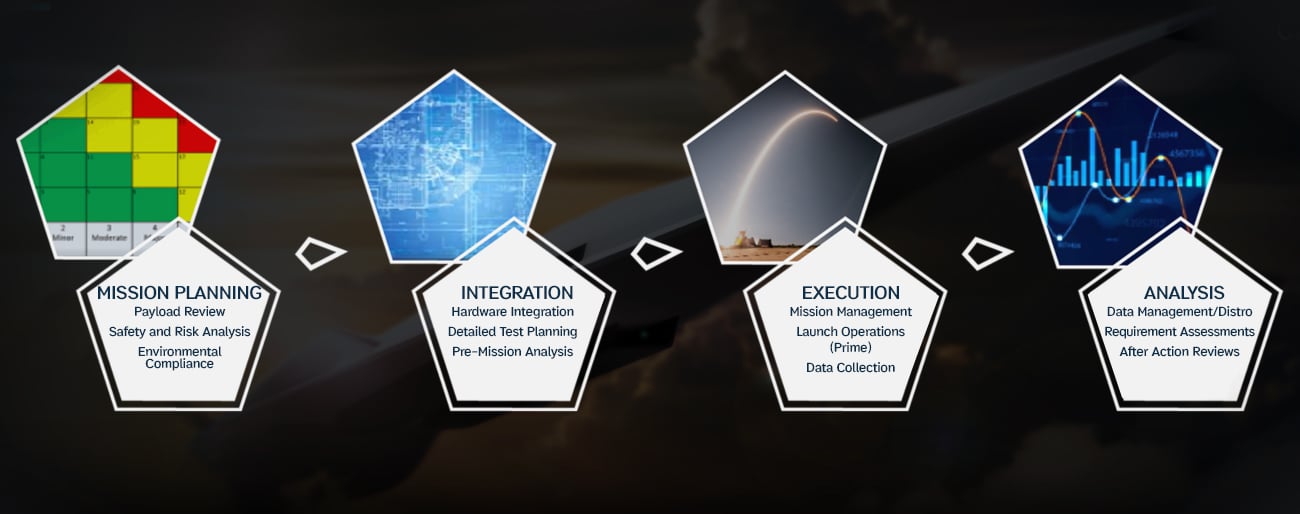
The MTSI team delivers proven Test and Evaluation (T&E) capabilities to support end-to-end test planning, design, development, integration, test execution, analysis and evaluation.
STRATEGIC TEST PLANNING
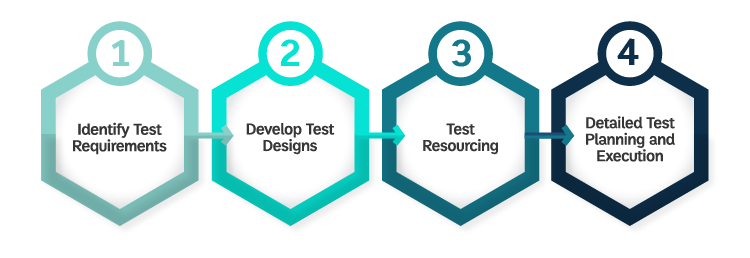
Our support encompasses the full span of systems engineering and technical assistance (SETA) activities across multiple stakeholders. We have expertise in requirements development, prototyping, integration, test and fielding.
HADES
MTSI’s HADES Test and Evaluation (T&E) framework revolutionizes the evaluation and hardening of AI/ML algorithms for national defense by leveraging advanced reinforcement learning agents to simulate high-fidelity and physically-valid test environments, accelerating algorithm development while ensuring performance, robustness, and saliency across operational envelopes.
With over 30 years of expertise in defense, AI, and testing and evaluation, MTSI’s modular and extensible HADES platform empowers DoD customers to validate, stress-test, and enhance AI-enabled systems. It rapidly identifies performance gaps, toxic or enhanced performance regions, and vulnerabilities, enabling the creation of tailored training datasets to ensure algorithm robustness in evolving threat environments.
HADES empowers the Department of War with state-of-the-art AI assurance capabilities by bridging development, testing, and fielding milestones. Its innovative approach combines domain expertise, physics-based modeling, and a high-throughput data generator, delivering efficient, scalable, and trusted solutions for critical defense missions.
TEAAS
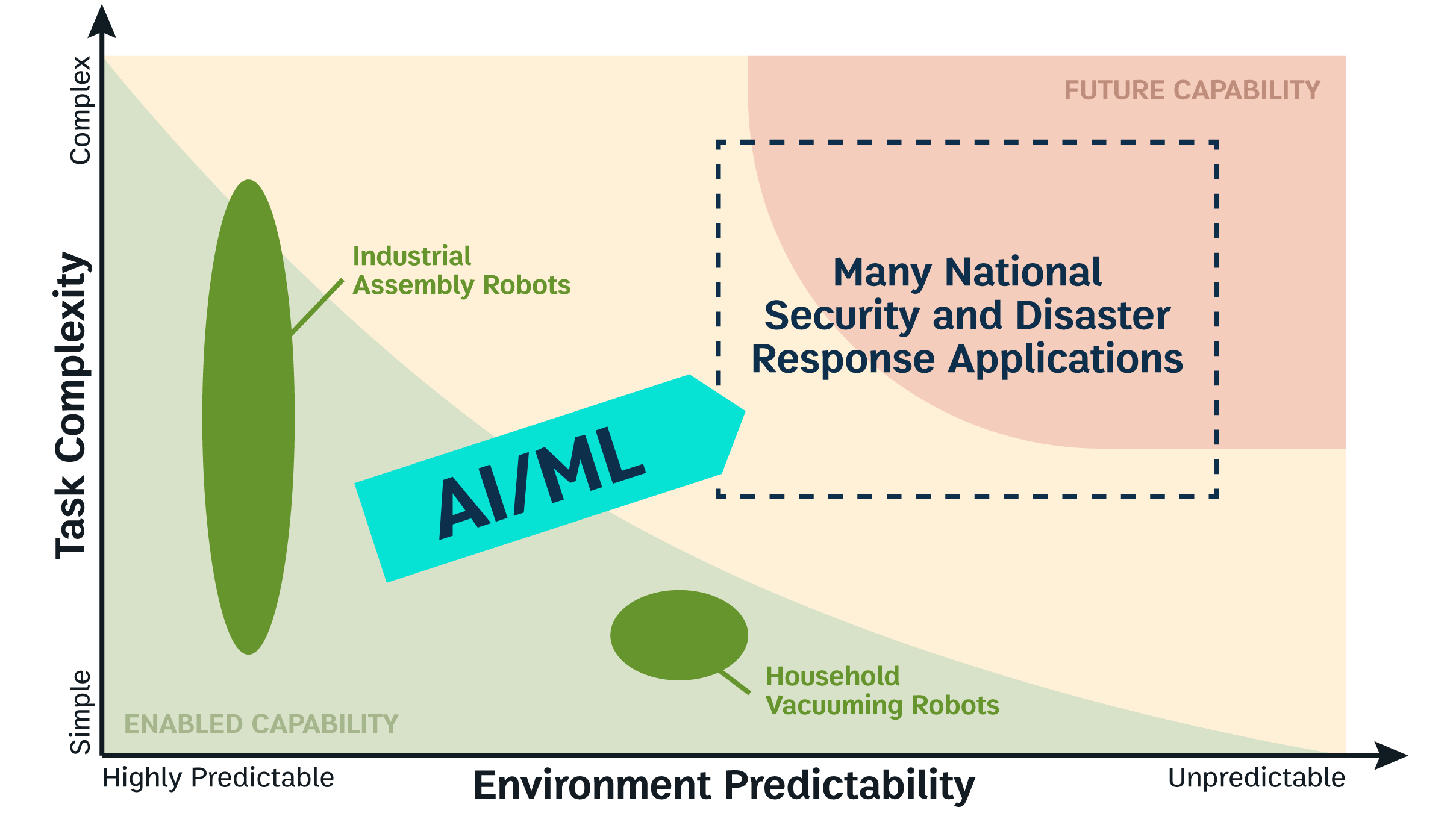
Revolutionizing Test and Evaluation for Autonomous Systems: Our R&D initiative addresses the critical challenge of testing AI-enabled autonomous systems with unpredictable behaviors. The “AI Test Director” uses physics-accurate simulation and intelligent optimization to create realistic scenarios that expose system vulnerabilities, enabling continuous, lifecycle testing and operational realism to ensure mission success.
Advancing Test and Evaluation for Complex Autonomy: To meet the DoD’s need for robust evaluation of autonomous systems, we are developing a virtual proving ground to stress-test and validate performance. By focusing on data quality, transparency, and adversarial testing, our approach transforms T&E to predict and quantify emergent behaviors, ensuring trust, accountability, and operational readiness.
HYPERSONICS
MTSI provides critical mission planning, test execution, and assessment for current and future, offensive and defensive, advanced hypersonic systems.
MTSI’s capabilities include conducting end-to-end hypersonic flight test planning, design, development, integration, mission architecture, range coordination, safety, test execution, and pre-/post-test analysis.
Our approach incorporates innovative solutions and software tools that provide our customers with substantial time and cost savings allowing for test execution using flexible launch platforms, unique low-cost target solutions, and sub-scale and full-scale launch vehicles at a high test cadence.



Mission Focused Solutioning
DEFINE THE NECESSARY PARTS
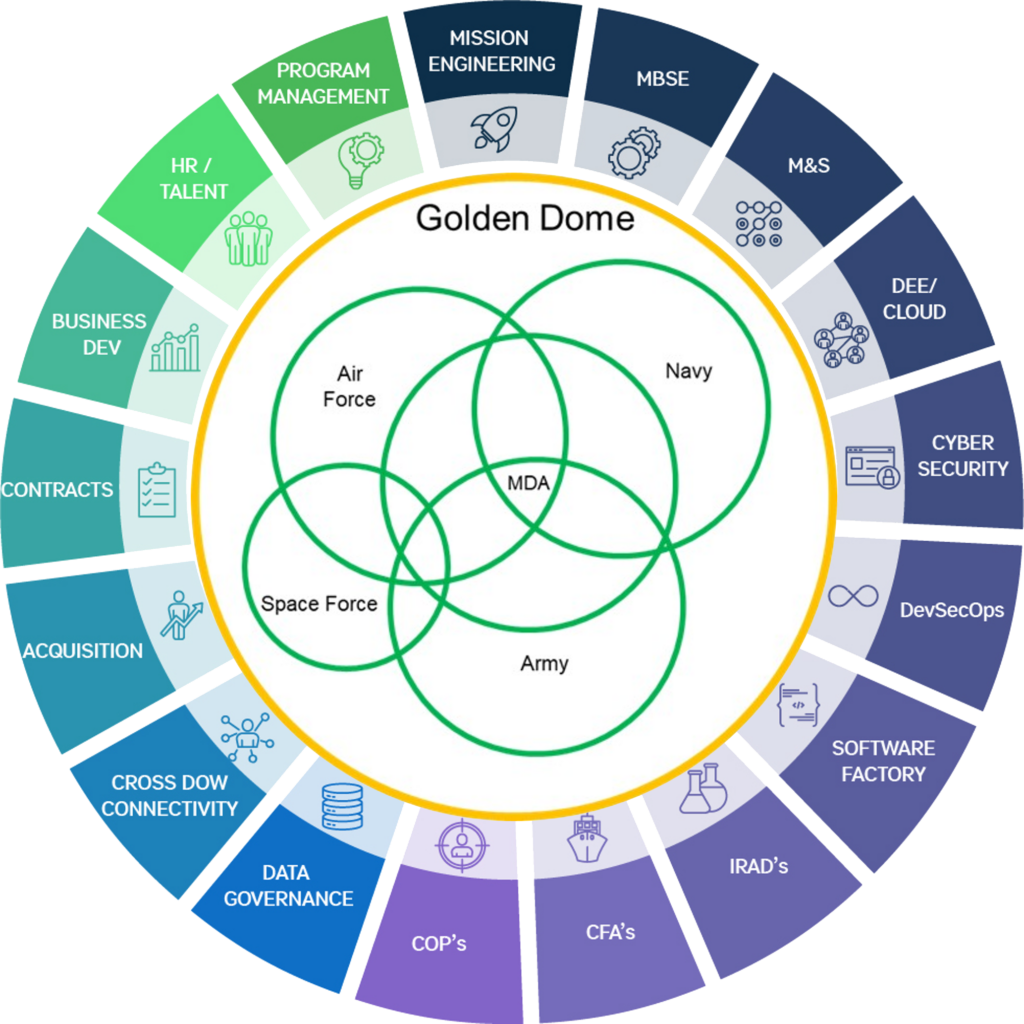
MFS provides a differentiating operational framework that aligns full life-cycle Mission Engineering principles with practical execution through a whole-of-company approach.
- Starts with the mission problem, not the product
- Aligns cross-domain capabilities (engineering, cyber, modeling, data, architecture, operations) into a coherent solution
- Orchestrates integration across stakeholders instead of optimizing individual components
- Continuously adapts as mission conditions and external requirements evolve
Tailored Acquisition
THINK BIG
Acquisition must support mission capability delivery, not program isolation, with timelines that must align with operational urgency.
OVERVIEW
MTSI has been repeatedly selected by senior DoW leaders to start-up and serve as the SETA prime for rapid prototyping, testing, and deployment of Warfighting capabilities. As the first choice to lead these critical efforts in the AF RCO, OSD SCO, Space RCO and key role on Army RCCTO, we have over 300 FTE supporting rapid efforts of National importance across these organizations today.
Our knowledge of rapid acquisition authorities, utilization of digital engineering, and cadre of subject matter experts enables the desired support to customer organizations necessary for effective and efficient delivery of capability.
COMMITTED TO OUR PARTNERS
- Space Force
- Missile Defense Agency
- Air Force
- Army
- Navy
RAPID ACQUISITION APPROACH
Successful Rapid Acquisition balances the speed of getting something to a warfighter against process and regulations. In MTSI’s role supporting departmental Rapid Capability organizations and the Strategic Capabilities office we have a long history of providing the right technical assistance and advisory to the government to allow them to take the right calculated risk when it comes to testing, cyber, and requirements flexibility.
MTSI delivers highly capable technology SMEs that also have deep DoD acquisition knowledge, coupled with a warfighting mentality, to rapid acquisition organizations to help architect a tailored approach to each project and program with an acceptable amount of risk.
RAPID ACQUISITION PATHWAY EXPERIENCE
MTSI has long led in applying rapid acquisition with rigor and leveraging innovative contracting models to deliver critical technologies faster and more effectively. We’ve equipped the government to lead consortium-based acquisition models that enable collaborative development of modular open systems and integrated system-of-systems architectures.
Unlike traditional prime-dominated approaches that often fall short, the partnership model we enable drives speed, competition, and government ownership of system authority. We’ve brought it to life on major programs like the Next-Generation Air Dominance (NGAD) family of systems, the Army’s Long Range Hypersonic Weapon “Dark Eagle”, and now the F-47 sixth-generation fighter, partnering with the government to elevate their role as a peer-level lead systems integrator.
Kill Web Analysis
THINK BIG
Turn complex tests and kill‑web interactions into clear, actionable insight—reducing risk and maximizing mission effectiveness
SOLUTIONS THAT INFORM
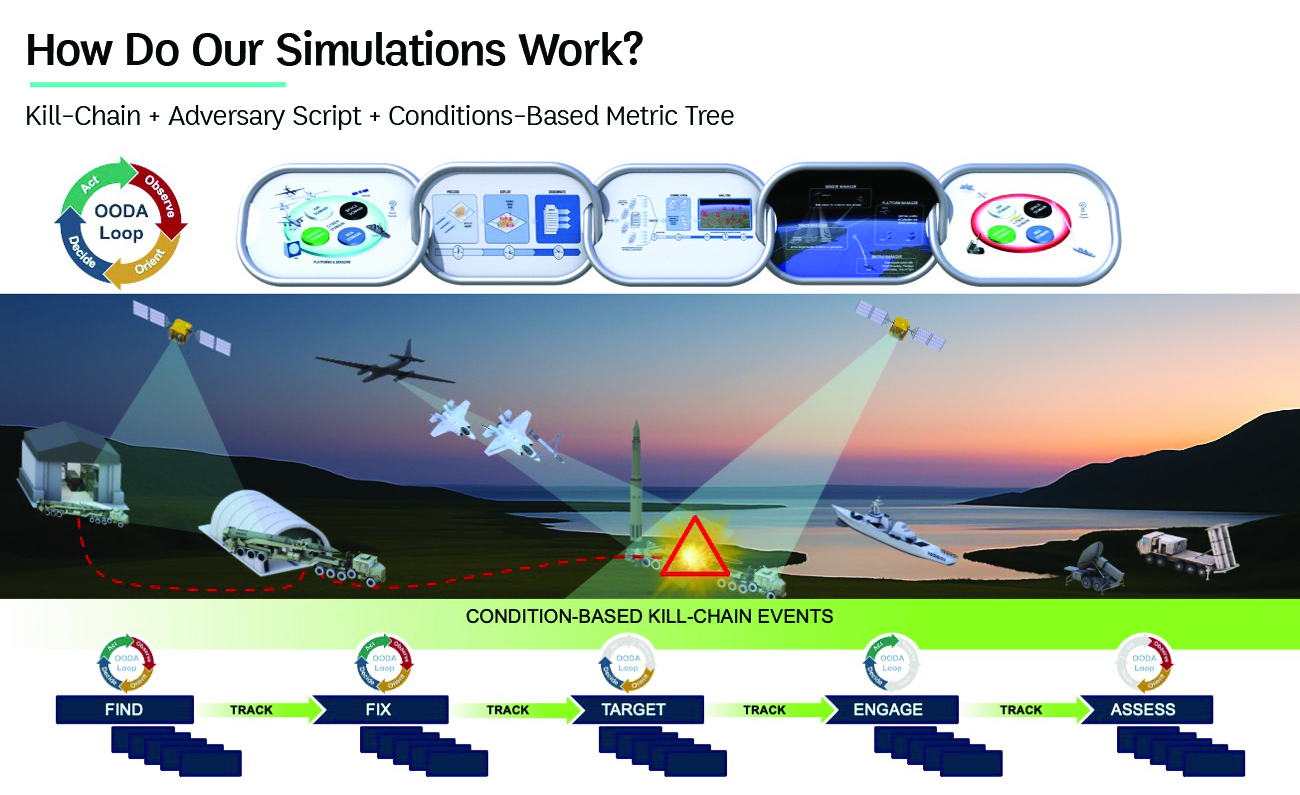
MTSI models military kill webs consisting of interconnected kill chains to inform decision-making across crucial issues which can determine success or failure in modern warfare. Each kill chain is a linear, sequential model of an attack, while the kill web represents a more complex, interconnected network of attack paths and potential responses.
America’s and our allies’ opponents actively develop techniques to disrupt and break our kill webs, such as electronic warfare, jamming communications, decoys, and maneuvering hypersonic weapons. Effective defense against enemy countermeasures requires close collaboration and integration of systems and forces across different domains (e.g., Army, Navy, Air Force).
MTSI implements both the F2T2EA (Find, Fix, Track, Target, Engage, Assess) concept and Boyd’s OODA loop for modeling the different phases of kill webs. In doing so, we provide our customers with the ability to understand what required systems and performance levels to disrupt and defeat adversarial attacks.
MODELING AND SIMULATION CAPABILITIES
Operations Analysis Modeling & Simulation
Mission & Campaign Analysis
Engineering Analysis (RF, EO, IR)
High Fidelity Closed Loop Simulation
Sensors models and tasking
Weapons, lethality, and fire control
HW/SW-in-the-Loop Simulation
Mission risk reduction
Hardware/software integration & testing
Live-Virtual-Constructive Simulation
Access to senior technical expertise
Application-specific software engineering
AI-Powered Open Loop Simulations
HADeS for EO/IR discrimination
HIRTSS
HGV battle management
CATEGORIES OF TOOLS DEVELOPED/USED
MTSI utilizes many individual models, simulations & general-purpose tools to support a wide variety of customer challenges.
Threat Models & Scenario Generators
Medium & High-Fidelity Sensor System Simulation (EO/IR & RF)
EO/IR Imaging Sensor / Seeker Models
Laser Propagation & Performance Models
Tracking & Discrimination Algorithm Testbeds
Space Architecture Trade Models
Lethality Codes
3/6 DoF Platform Simulations (air, space, sea, ground)
System Kill-Chain / Engagement Simulations
Dynamic Targeting End-to-End System Simulation
Coverage / Mission Level Models
COTS Tools – Development environments, visualization, utilities
GOTS Tools – Specialized models such as OSC, FLITES, AFSIM, ABP & many others
MTSI’s TOOL SET
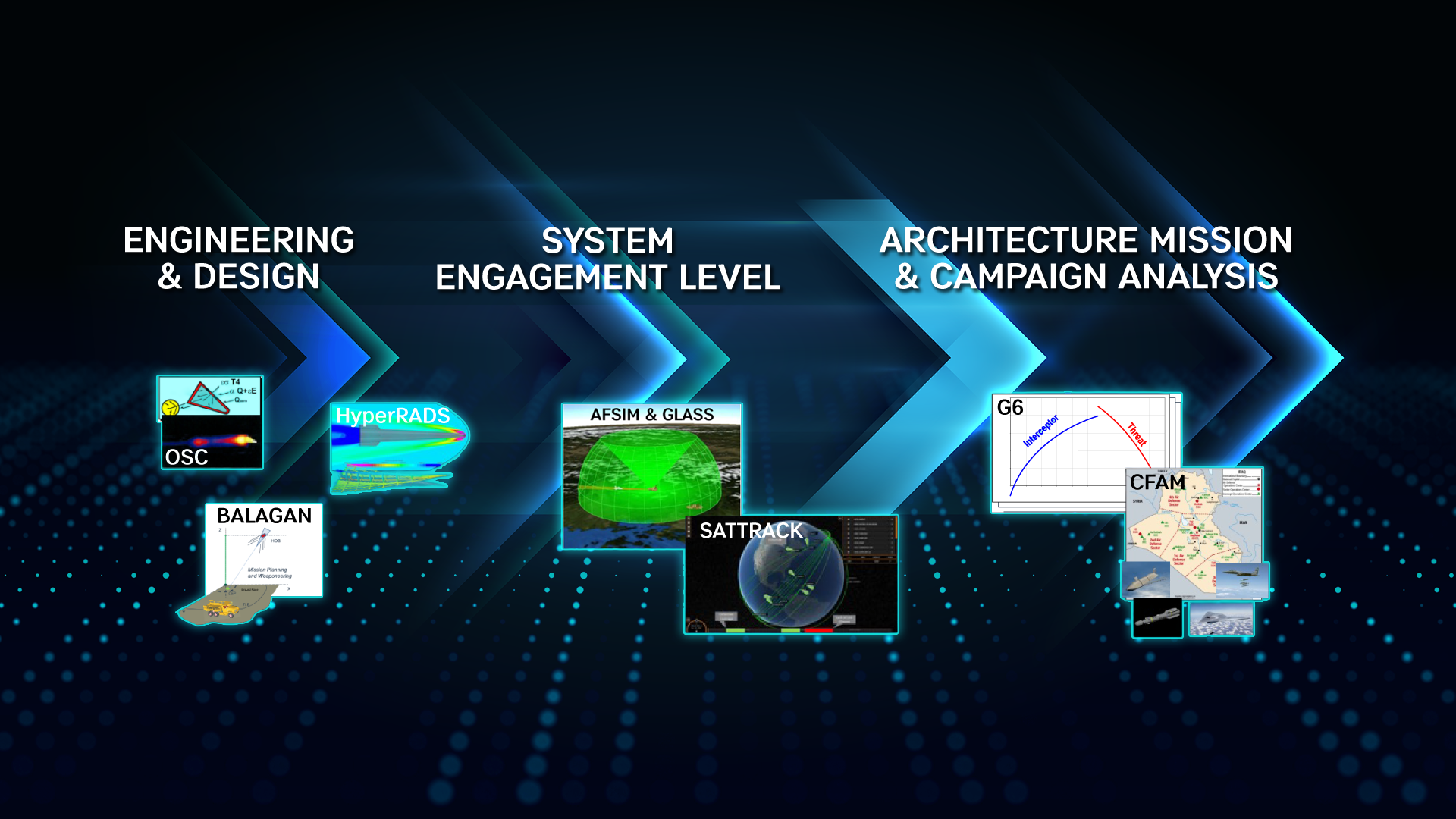
CFAM: Analytic tool built for optimization problems such as determining the mix of munitions required to maximize the value of targets destroyed given a set of prioritized targets.
AFSIM & GLASS RED & BLUE: All-domain architecture & mission analysis for kinetic & non-kinetic, constructive & live M&S. CFAM fed. with AFSIM-GLASS for campaign analysis to quantify new concept value to force structure, cost, time of completion, sorties, attrition, etc.
G6: Closed-loop end-to-end weapon engagement simulation of fire control, threat and interceptor with 6DoF fidelity.
SATTRACK: Closed loop space layer sim of constellation/platform sensors for track QoS.
HyperRADS: COTS-based multiphysics M&S capability used to analyze and design concepts in air and water domains.
OSC, OPTISIG, SOCRATES-P, HIRTSS: Physics-based generation of EO/IR hardbody signatures, wake modeling, plumes.
GLASS OVERVIEW
GLASS is a physics & effects-based, closed-loop, Monte Carlo simulation using Boyd’s OODA as the foundation for modeling, simulating & analyzing a combined Left-through-Right of Launch missile defeat kill web against advanced missile threats. It is built using the Advanced Framework for Simulation, Integration, and Modeling (AFSIM) software.
CAMPAIGN ANALYSIS
MTSI developed and demonstrated an architected solution that federates AFSIM for mission analysis with Combat Forces Assessment Model (CFAM) for campaign analysis to more effectively assess value of new systems, concepts, CONOPS, and TTP for warfighters with conflict-level metrics including platform attrition, weapons expended, sorties, conflict time and cost. This enables rapid case exploration and database generation to inform and accelerate a more comprehensive, higher-fidelity campaign analysis in Synthetic Theater Operations Research Model (STORM).
KILL CHAIN ARCHITECTURE
Threat Engineering
THINK BIG
Fuse independent test insight with advanced threat engineering to expose vulnerabilities early, validate performance, and strengthen layered defense.
OVERVIEW
Today’s Ballistic Missile Defense Systems (BMDS) face formidable capability, capacity, and cost challenges. Our adversaries evolve a more mobile, complex, and nearly continuous threat spectrum across the characteristics of altitude, speed, propulsion type, and range. The increasing prominence, complexity, and quantities of these current and projected threats and a limited budget to develop optimized solutions amplify these challenges.
SUPPORT
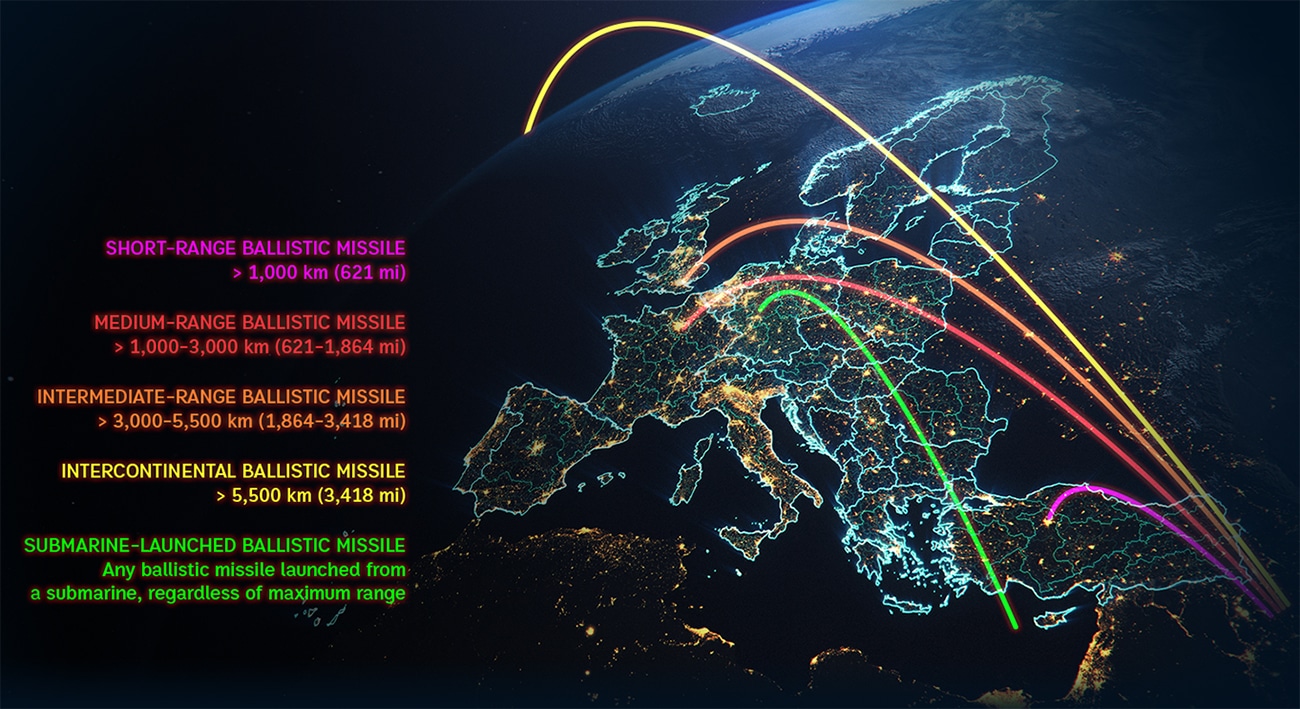
MTSI, along with our strategic partners, understands the challenges and possess the skillsets and experience delivering cost-effective digital representation of adversary missiles, missile-related observables, and flight test targets across all BMDS programs in direct support of MDA’s Threat System Engineering. Our team collaborates with the U.S. intelligence community (IC) and exploits the data collected and created by the IC to provide high fidelity, threat representative CAD, IR, RF, and kinematic models.
SOFTWARE & TOOLS
MTSI and its team has the knowledge and resources to simulate intel developed scenarios and model the phenomenologies associated with threat systems from boost phase to engagement. MTSI utilizes both MDA and MTSI developed tools to model kinematics (G6, TGx), RF signatures (Xpatch), IR Hardbody Signatures (Optical Signatures Code, OPTISIG, HiRTSS), and wake and plume modeling (VIPER, SOCRATES, WAKPRO, HyperRADS) to provide high-fidelity simulations in support of DoD.
LETHALITY
MTSI’s suite of accredited lethality tools enable our customers to evaluate and down-select the most promising offensive and defensive weapon systems; resulting in significant time and cost savings for design, development, test, and fielding of advanced kinetic weapons systems.
Space Warfighting Integrated Capabilities
OVERVIEW
MTSI Strategic Space is the preferred lead for rapid development, test, fielding, and sustainment of emerging, first-of-kind space warfighting capabilities.
As a prime contractor, MTSI provides highly specialized systems engineers and acquisition specialists to rapidly develop ground systems, payloads, busses, launch and launch control to field first-of-a-kind space capabilities to meet operational needs of today’s warfighter.
RAPID ACQUISITION SUPPORT
MTSI performs rapid prototyping, testing, deployment, and sustainment of ground-based, space capabilities meeting time-sensitive requirements with a joint military-government civilian team focused on the warfighter. We also provide technical leadership roles critical to development of acquisition strategies and technology efforts to meeting aggressive cost and schedule requirements for both the Transport and Tracking Layers.
MTSI provides defensive cyber capabilities that protect mission systems, software applications, and sensitive operational information against unauthorized intrusion, corruption, and/or destruction.
CUTTING EDGE SOFTWARE INTEGRATION
MTSI delivers agile development, software engineering and analytical services. Through this, MTSI provides responsive and innovative space, air, maritime, and ground-based intelligence, Surveillance and Reconnaissance (ISR)-system situational awareness solutions. MTSI provides collection situational capabilities for a diverse blend of National, Tactical, and Maritime assets, covering past (event reconstruction), present (in near real time), and future time windows. We deliver visualization content compatible with multiple industry standard visualization tools, including Cesium, Leaflet, Google Earth, and others.
Our expertise in real-time data integration, Cloud Application Development, Data Science, UI/UX and DevSecOps to develop applications for the purpose of building out an operational center. MTSI provides engineering support and application development in support of joint customers. MTSI engineers utilize our expertise in Breakup Modeling, real-time data integration, Cloud Application Development, Data Science, User Interface/User Experience (UI/UX) and DevSecOps to transition applications from R&D to operations.
SYSTEMS ENGINEERING & INTEGRATION
MTSI leads analysis to aggregate our nation’s space capabilities. MTSI talent advise on how best to present space forces with current capabilities matched to current threats taking into account knowledge of our space acquisition pipeline of future forces. Proper advisement for future aggregation of forces requires expert reduction of future threat analysis, which is integral to operational planning of our newest service and combatant command.
MTSI leads cradle-to-grave technical, programmatic and engineering efforts, including threat analysis, architectures/concepts, requirements, sensor data analysis, design, acquisition support and integration of emerging capabilities. Programs include kill assessment and hypersonics and ballistic tracking space sensor.
MTSI provides systems engineering, logistics support, and supports modernization. MTSI and its teammates execute effective and responsive integrated engineering and logistics of space-related research, development, test, production, launch and sustainment activities. MTSI proudly serves with next-generation capabilities to our customer from multiple geographical locations.
Digital Ecosystems
BENEFITS TO OUR UNIQUE APPROACH
MTSI tailors digital transformation strategies to meet the particular needs of government and defense communities as well as joint- and multi-domain customers. We educate customers about our specialized services and demonstrate how we can collaborate in order to improve mission effectiveness, increase operational efficiency, and advance situational awareness.
DIGITAL TRANSFORMATION 101
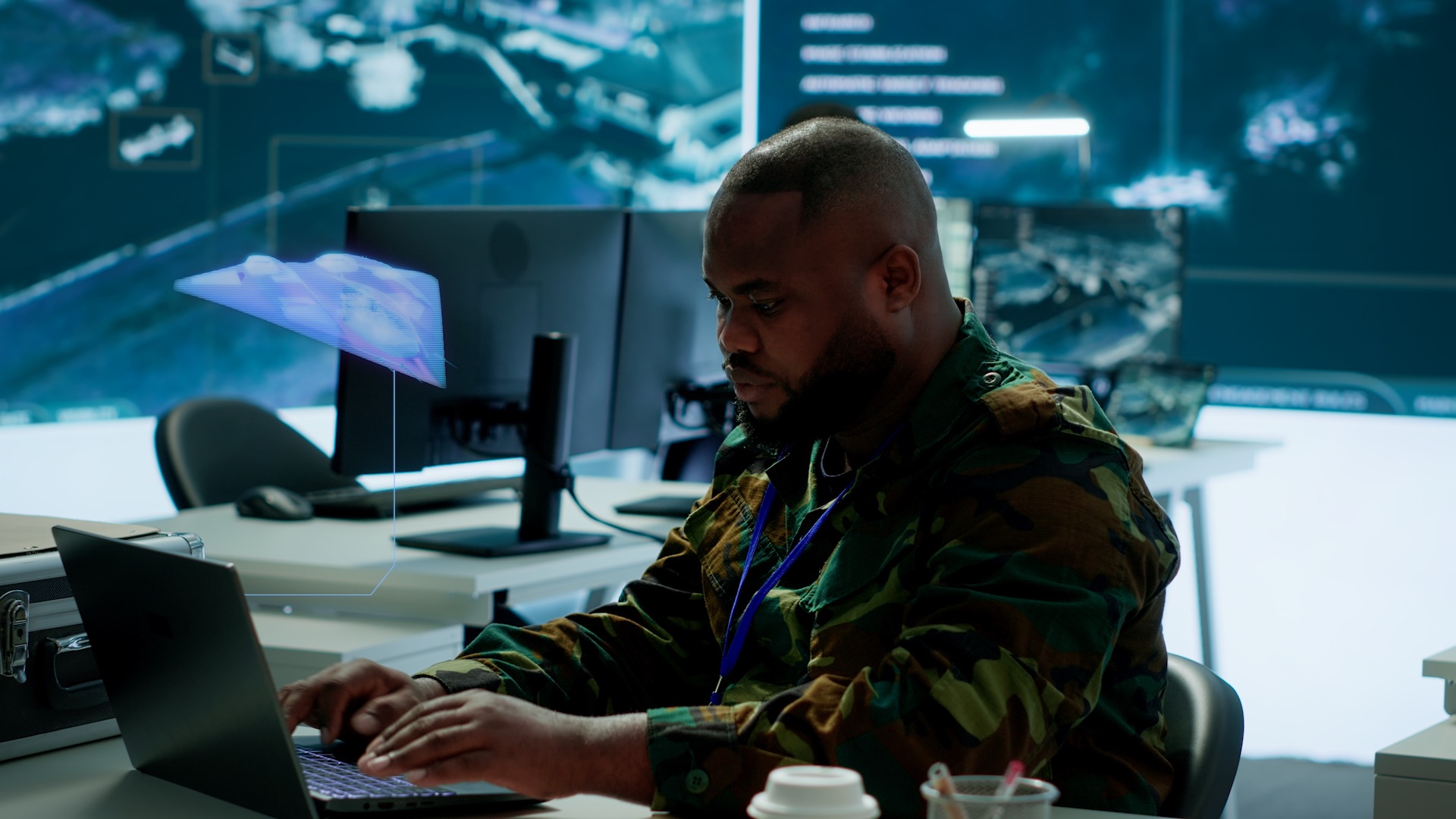
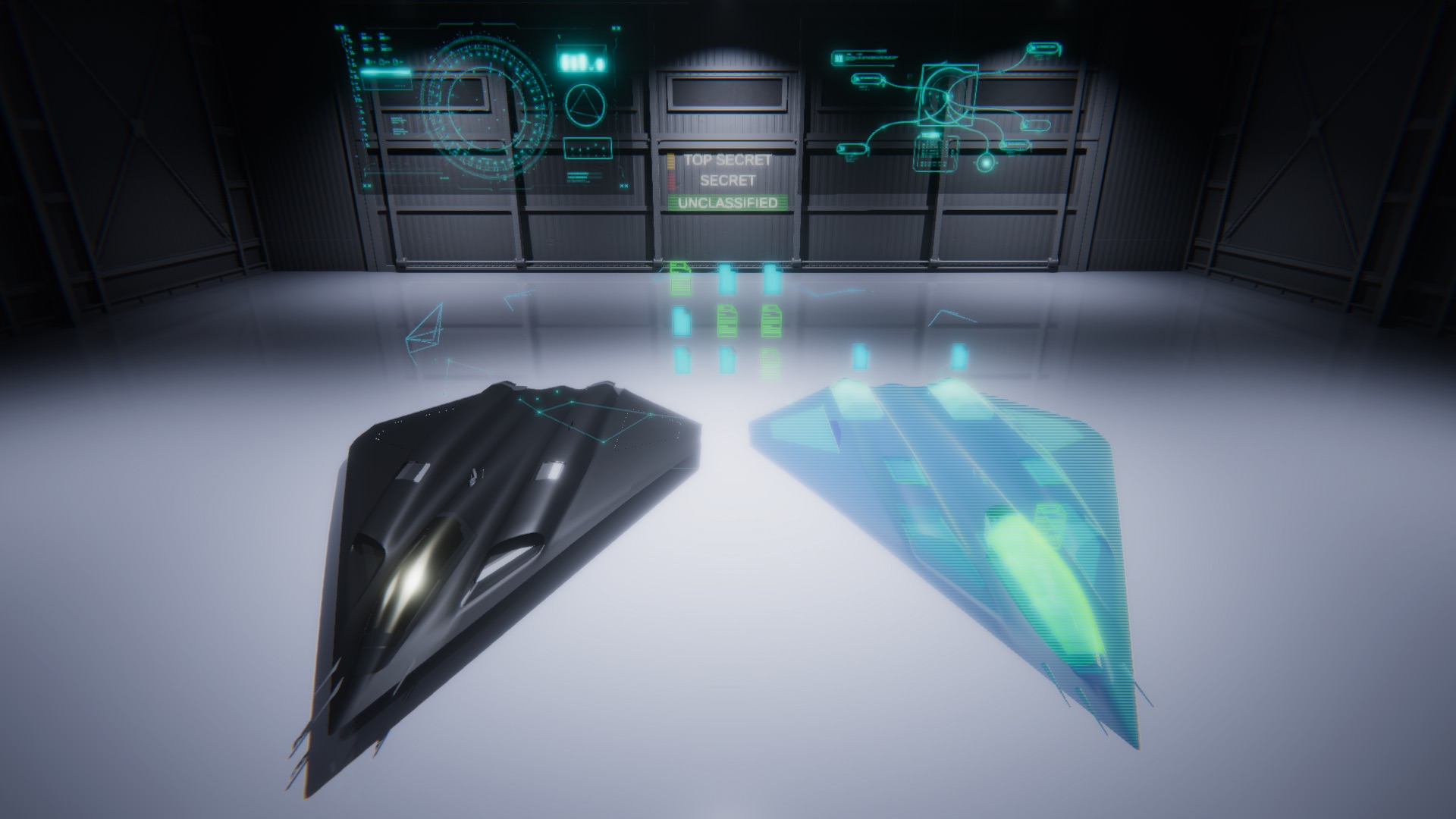
MTSI’s “Foundations for Enabling Digital Transformation” is a four (4) hour course designed to provide a detailed introduction of Digital Transformation including Digital Engineering, Model Based Systems Engineering (MBSE), Digital Twins, DevSecOps agile software development, Open Architecture, and other elements of a Digital Ecosystem.
AI/ML
At MTSI, we have a long-standing relationship with Artificial Intelligence and Machine Learning. We have proudly supported our DoD customers for 30 years with advanced algorithm development and keep pace with all the emerging technologies and DoD policies.
With over a century of combined advanced analytics support to DoD customers, 100% of our AI/ML team have advanced degrees in data science, predictive analytics, computer science, physics, and engineering. A successful AI/ML effort requires expertise in algorithms, the technical domain, and the warfighting mission.
We have all three.

AI FOR TEST & EVALUATION
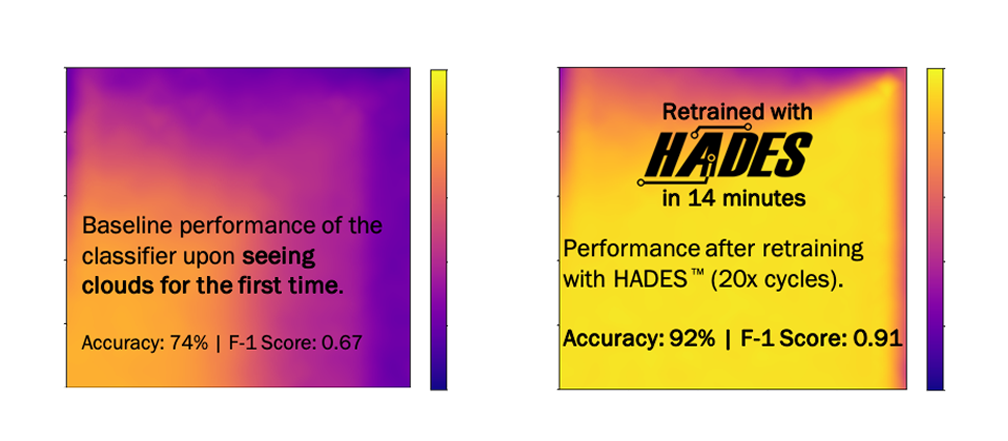
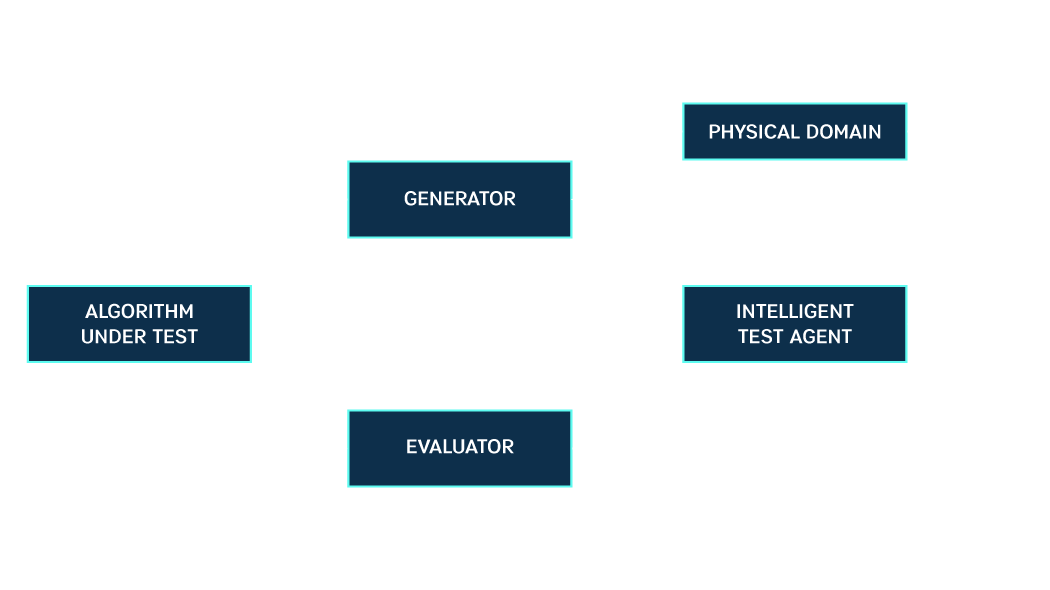
MTSI created the Harnessing AI for Development and Evaluation of Systems (HADES) Tool to assess the real-world performance of Machine Learning (ML) algorithms under test (AUT), enhancing their reliability and resilience.
HADES uses an intelligent agent designed as an ‘adversary’ to explore the AUT’s performance space by altering its inputs.
This agent’s search process is more efficient than grid search methods and more effective than traditional Design of Experiments. Insights generated by HADES can be used to retrain the AUT, significantly improving its robustness across a broader range of operating conditions.
Generative AI
MTSI leveraged advanced generative AI to tackle a data-heavy challenge by compressing high-fidelity, physics-based kinematic data into an autoencoder. This enables users to produce lower-fidelity trajectories suitable for analysis, modeling, and simulation.
Generative AI delivers results 1,000 to 10,000 times faster than traditional physics-based models, while also producing significantly smaller file sizes.
This approach accelerates analysis and facilitates rapid exploration of system concepts. The solution is deployable in secure cloud environments or standalone enclaves, operating on customer data at required classification levels.
Deep Neural Networks for Super-Resolution
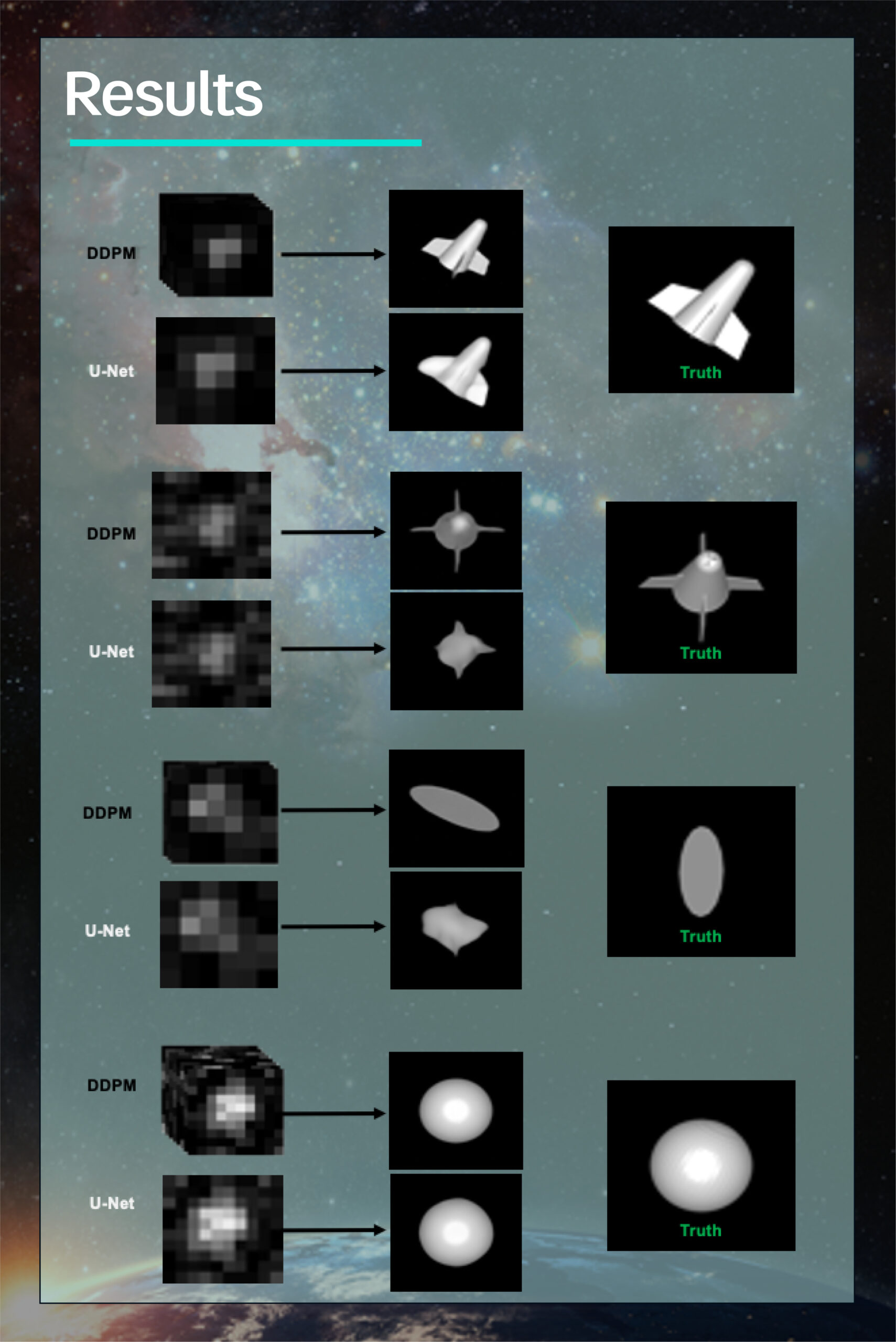
We developed an algorithm for model based super resolution that converts unresolved focal plane imagery into a highly resolved map of the target. This has immediate utility for the intelligence community and mission defense Fire control in areas of object characterization and aimport selection.
Algorithm
We developed a diffusion model (DDPM) which uses a convolutional neural network (U-Net) to recursively denoise an image.
Ongoing Work
We integrate DDPM into our M&S environment to assess its utility for aimpoint selection, adding a classification layer for implicit object classification and including pose information as an output.